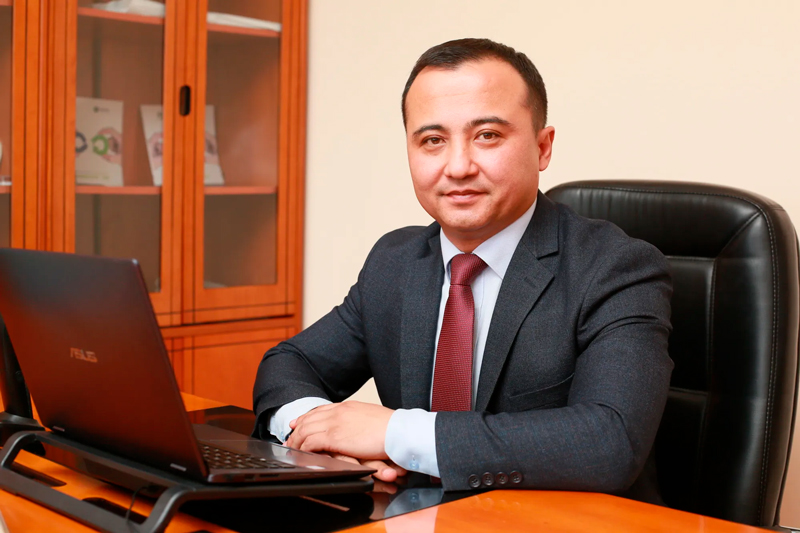
Two microfinance organizations, KMF and Solva, have announced their intention to convert into banks. However, in order to provide this and other MFOs wishing to engage in banking activities with such an opportunity, a draft law is currently being developed. At what stage this document stands, what its key features are, and how long the transformation into a bank may take – these issues were discussed by the correspondent of the business information center Kapital.kz with the Chairman of the Association of Microfinance Organizations of Kazakhstan (AMFOK), Yerbol Omarkhanov.
— Yerbol, at what stage is the development of the draft law on the transformation of MFOs into banks?
— The draft Law of the Republic of Kazakhstan “On Amendments and Additions to Certain Legislative Acts of the Republic of Kazakhstan on the Regulation and Development of the Insurance Market and the Securities Market,” which also contains provisions on the conversion of MFOs into banks, is currently being discussed within a working group of the Mazhilis of Parliament. I believe that in the near future the draft law will be submitted for a second reading.
— Please tell us about this draft law and its key provisions. What timeframe is предусмотрен for the transformation of an MFO into a bank?
— The draft amendments to the legislation on the conversion of MFOs into banks were initiated by the Agency of the Republic of Kazakhstan for Regulation and Development of the Financial Market in 2021. This initiative was associated with expanding the potential of large MFOs specializing in financial support for small and medium-sized businesses.
The main category of MFO borrowers consists of self-employed citizens living in rural areas. Currently, apart from issuing microloans, MFOs are not allowed to provide clients with a wide range of financial services such as money transfers, opening accounts, accepting deposits, and so forth. However, there is a clear demand for such services among MFO clients, especially among residents of remote regions of Kazakhstan where bank branches are still insufficiently represented.
Therefore, in our view, establishing banks on the basis of MFOs through transformation will contribute to a broader penetration of financial services into remote regions and, consequently, to the development of financial inclusion.
According to the draft law, within one year from the date of obtaining permission from the authorized body to convert a microfinance organization into a bank, the MFO must complete all organizational and technical measures предусмотренные by legislation and apply to the financial regulator for a banking license. In other words, no more than one year should pass from the moment permission for conversion is granted to the receipt of a banking license.
The essence of the conversion lies in a smooth and gradual transformation of an MFO into a bank, so that this process does not lead to a prolonged suspension of the MFO’s activities, loss of its client base, or weakening of its position in the financial services market. Most importantly, clients should not experience discomfort during the transition period. In practice, the bank will be created on the platform of the MFO, taking into account its established authorized capital, material and technical base, and client base.
— When is this draft law expected to be adopted?
— We hope that the document will be adopted and enter into force this year. In any case, MFOs that intend to participate in the conversion process are already carrying out preparatory work to bring their internal processes and procedures into compliance with banking legislation.
— Will the same requirements be imposed on MFOs transforming into banks as on existing banks, or will there be specific conditions?
— At present, microfinance legislation, particularly with regard to lending activities, is virtually aligned with banking regulation. This was done to eliminate regulatory arbitrage in the provision of credit services. Therefore, the activities of MFOs are more similar to banking activities than to those of other participants in the financial system.
The requirements for MFOs that decide to convert into banks will not differ from the conditions for establishing a bank on general grounds. The draft law does not provide for any privileges or regulatory relaxations for MFOs.
On the contrary, we believe that high requirements should be imposed on the business reputation of MFOs, their management, and their experience in the credit services market. Taking into account the requirements of banking legislation, conversion will be available only to large MFOs that currently possess the necessary resources to transform into a bank. Therefore, a mass conversion of MFOs into banks should not be expected.
At the same time, we hope that MFOs that do convert into banks will retain their microfinance orientation, client base, and lending methodology. We also expect them to continue focusing on financial support for SMEs operating in the regions.
— Yerbol, do you have information on which other MFOs, besides KMF and Solva, have expressed readiness to become banks?
— As far as I am aware, so far only the two companies you mentioned have announced their plans for conversion. At the same time, everything will depend on their ability to meet all the requirements applicable to banking activities. Expressing readiness does not yet mean becoming a bank. Time will show how the situation in the market develops further.
In any case, we consider the provision of such an opportunity to be a positive signal for the microcredit market, confirming the growing level of trust in the MFO sector.


Republic of Kazakhstan, 050004, Almaty, st. Gogol 111, office 610
amfok.coordinator@gmail.com
+7 (727) 279-18-06
Copyright © 2005 - 2026 Association of Microfinance Organizations of Kazakhstan. All rights reserved.