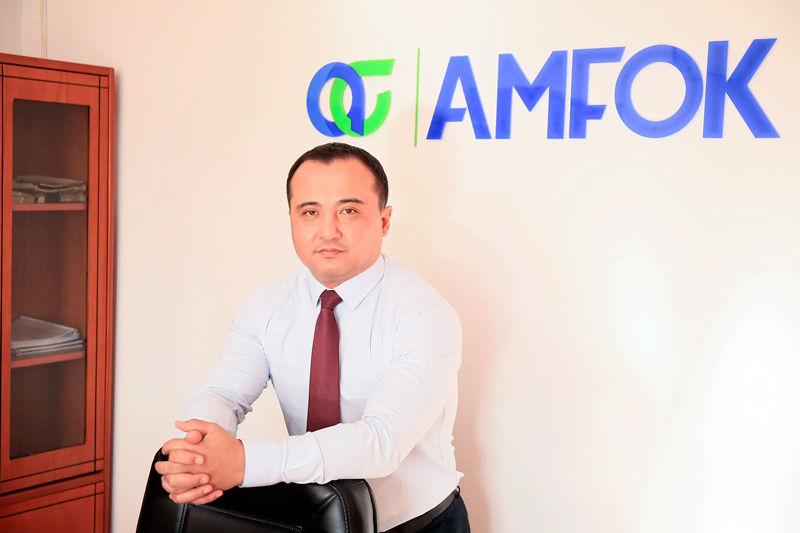
Do microfinance organizations need ratings? How many MFOs with foreign participation operate in Kazakhstan? Who protects clients from unfair financial services? How many citizens have already suffered from their actions? Yerbol Omarhanov, head of the Association of Legal Entities “Association of Microfinance Organizations of Kazakhstan” (AMFOK), spoke about this in an interview with a correspondent of the Kapital.kz business information center.
- Yerbol, a few years ago you spoke about the need to create a domestic national rating agency whose ratings would be accepted by interested investors. As far as we know, this has not happened yet. Tell us, do microfinance organizations need ratings at all?
- Yes, Kazakhstan does not yet have specially established rating agencies that assess the performance of MFOs. Large MFOs independently undergo assessment by international rating agencies, for example KMF, OnlineKazFinance, Toyota Financial Services Kazakhstan. They are participants of the stock exchange and work with international financial institutions, so ratings certainly play an important role for them in terms of funding and increase the level of investor confidence.
However, in addition to ratings that assess the financial position of an organization, there is a social rating. This is an independent third-party assessment awarded for a financial organization’s compliance with client protection principles in its activities and product line.
Certification is usually carried out by the leading European certification company MicroFinanza Rating, which has offices in different countries, including Central Asia.
To obtain the MicroFinanza Rating certificate, seven principles must be observed. The first principle relates to the proper design and delivery of products (studying clients’ needs and “selling” loans correctly). The second is the prevention of over-indebtedness (assessing the client’s solvency and creditworthiness). The third is transparency (disclosing all of the client’s costs before issuing a loan and properly informing the client of all terms of the agreement). The fourth is responsible pricing (setting a fair interest rate that is affordable for the client and ensures the company’s sustainability). The fifth is fair and respectful treatment of clients (no violations of ethics in working with clients at all stages, including when there is a debt). The sixth is the confidentiality of client data (observing the secrecy of microcrediting and the confidentiality of personal data). The seventh principle covers mechanisms for handling and resolving complaints (having a clear system: where to submit complaints, how they are recorded and reviewed, the timeframes and the client’s satisfaction with the outcome of the complaint).
- Do any MFOs already have the MicroFinanza Rating certificate? How much does it cost to obtain such a rating?
- At present, only three MFOs in Kazakhstan have a certificate of compliance with client protection principles – Arnur Credit, Asian Credit Fund and KMF.
As for the cost of certification services, it is approximately 5,000 euros.
At the same time, I would like to add that client protection principles are rated much higher than regulatory requirements for protecting the rights of consumers of financial services.
Thus, in our opinion, the market’s movement towards respecting the rights of consumers of financial services will bring greater efficiency in terms of transparency and increasing the social responsibility of MFOs. In turn, certification opens up access to foreign capital markets. Therefore, conditions need to be created under which fair market behavior is economically beneficial for MFOs.
We recently approached the Agency for Regulation and Development of the Financial Market (ARDFM) with an initiative to encourage MFOs to switch to certification for compliance with client protection principles. As the industry association of MFOs, we are interested in increasing the level of trust in the microfinance services sector and are ready to actively cooperate with the financial regulator on this issue.
- How many MFOs with foreign participation operate in Kazakhstan today?
- In general, in quantitative terms, MFOs with foreign participation do not exceed 30% of the total number of microfinance organizations.
In general, any state is interested in attracting foreign capital. For many years, Kazakhstan has pursued a policy of creating a favorable investment climate. Therefore, we see only positive aspects in the participation of foreign investors in the ownership structure of MFOs.
It is another matter that shareholders or participants of MFOs from other countries must also be committed to observing and respecting domestic legislation, social protection and support of our citizens, rather than pursuing the goals of short-term players who squeeze the maximum resources out of the population in pursuit of profit. We are against such a usurious business model in microfinance services and fully support the state’s measures to reduce citizens’ debt burden, but only without harsh excesses. Everything should be within the framework of maintaining a balance between regulation and development of the MFO market so as not to lead the microlending market to stagnation.
- Have there been precedents?
- It must be admitted that problems in the MFO sector still exist. The main risks for the microfinance sector were concentrated in online lending, which has the largest share of foreign participants and shareholders. Previously, the online lending market was not controlled by the state. It was brought under regulation and supervision only in 2020. Perhaps that is why a culture of strict compliance with legislation and the rights of consumers of financial services has not yet developed in this market segment.
However, it is worth noting that among these participants there are also fair and law-abiding companies; one should not tar everyone with the same brush. The financial regulator has done a great deal of work to bring order to this sector, closed all loopholes for unscrupulous MFOs and strengthened lenders’ liability.
- Who protects clients from unfair financial services provided by MFOs, including non-residents?
- The current mechanism for protecting the rights of consumers of financial services, established within the ARDFM, does not divide the market into residents and non-residents. Regulatory requirements are the same for everyone, including those regarding the terms of microloan agreements, maximum interest rates, restrictions on penalties, etc.
- Are there statistics on how many citizens have suffered from unfair MFO services?
- According to the Agency for Regulation and Development of the Financial Market, in 2021 the number of requests and complaints about MFOs, pawnshops and credit partnerships (a total of 1,058 organizations) amounted to 8% (or more than 1,800 applications) of the total number of applications submitted to the ARDFM regarding all financial market participants (banks, the insurance market, the securities market, etc.). This means that, on average, one organization engaged in microfinance activities received 1.7 complaints and applications from consumers of financial services over the year. You must agree that this is negligible to blame MFOs for increasing social tension due to the debt burden.
All applications and complaints are reviewed by the authorized body as part of a documentary inspection of the MFO. For violations of current regulatory requirements, MFOs are held liable as established by law.
To date, the regulator has closed all loopholes for abuse and unfair behavior in the microlending market. In particular, in the recent past, the most common scheme for increasing the debt burden on online microloans was splitting amounts into sums of up to 42,500 tenge so as not to calculate the debt burden ratio when issuing a consumer loan to an individual.
Currently, the ARDFM has prohibited issuing microloans without calculating the debt burden ratio if the borrower has an outstanding loan. That is, until the borrower repays the current microloan or bank loan, an MFO is not entitled to issue a new loan without calculating the debt burden ratio. In addition, amendments were recently adopted that halve the amount of overpayment on online microloans and oblige online lenders to extend the term of a loan agreement only on improved terms.
Of course, unfair practices in the microlending market are fraught with a decrease in the level of trust in the MFO sector, an increase in reputational risks, rising social tension in society and, for the borrower, an increase in the debt burden.
- Then the question arises: who guarantees the confidentiality of MFO clients’ data?
- The secrecy of microloan provision is guaranteed at the legislative level, and the MFO is responsible for the safety of the personal data transferred to the lender. The lender has no right to transfer the client’s personal data or use it for its own purposes without the client’s written consent.
If citizens receive calls from financial organizations with which they have not previously dealt and to which they have not provided their personal data, such a financial organization may have obtained this information about the client illegally. Therefore, in such cases, it is necessary to contact the authorized bodies.
In addition, personal data sometimes become known to criminals who take out loans in other people’s names, using them for their criminal purposes. Therefore, it is necessary to be very careful with your personal data and ensure the necessary level of protection against criminal encroachments so as not to become a victim of fraudsters, who cause damage not only to citizens but also to financial organizations by fraudulently gaining access to loans.
Source: https://kapital.kz/finance/104497/nuzhny-li-reytingi-mfo.html